 Polytoolhub
What is SEDA?
SEDA provides a data and computation layer for developers. An Oracle Program defines the retrieval and transformation logic; a Data Proxy connects a private API without placing its provider key in every caller. The developer paths distinguish deploying a program from executing an existing one through Fast.
Who it is for
- Builders designing event-data pipelines
- Developers connecting private data providers
- Agent teams integrating structured oracle results
Features and coverage
- Available on
- API, WebSocket, WASM, Smart contracts
- Markets & venues
- Cross-chain infrastructure
- Research topics
- Programmable oracles, External event data
- Oracle Programs
Package deterministic retrieval and transformation logic.
- Public and private sources
Connect data feeds, APIs and documented source paths.
- Data Proxies
Keep API-key access in a dedicated connector.
- Local build and tests
Compile the starter program to WASM and test before deployment.
- Program deployment
Upload to the SEDA network and obtain a program ID.
- Fast execution
Execute an existing program through API-oriented delivery.
- On-chain consumption
Use Core and a supported prover deployment.
- EVM integration
Follow the Hardhat integration path.
- Agent runbooks
Use task-specific guides for fetching, deployment and execution.
Workflows with SEDA
Build an outcome-data pipeline
Define the source and output schema, test edge cases locally and deploy the program.
Connect a licensed API
Create a proxy route and keep the provider credential in the documented proxy layer.
Consume a result
Choose Fast for the application path or verify the target-chain prover for on-chain use.
Pricing and total cost
The reviewed documentation does not provide a universal flat subscription for an oracle integration. Budget for the selected execution path, network usage and any separate data-provider subscription.
Getting started
Before you start: Fast executes existing programs; it does not deploy them.
- Choose the required source type.
- Read the corresponding agent/developer module.
- Build and test a minimal Oracle Program.
- Configure a proxy for private-source access if needed.
- Deploy the program and retain its ID.
- Select Fast or the on-chain result-consumption path.
Useful links
What to check
- Fast executes existing programs; it does not deploy them.
- A private API source still needs its own credentials and usage entitlement.
- Target-chain prover availability must be checked for an on-chain integration.
- A data pipeline needs explicit source, timeout and resolution logic to serve a prediction market.
A closer look
Ratings & reviews
User reviews 0
The main score switches to user ratings after 5 published reviews.
A specific example helps the next person choose the right tool.
Write a review
How was your experience with SEDA?
Share what you used, what worked and what could be better. We confirm your email and review the submission before publishing.
To submit a review, email info@polytradingbot.com with the tool name, your rating and your experience. Enable JavaScript to prepare a draft here.
Related tools
Browse category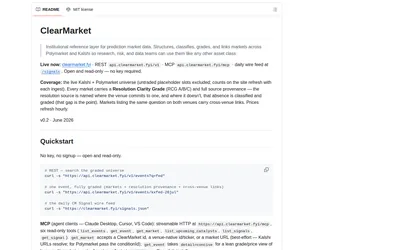
Inspect resolution-source quality, catalysts and cross-venue question links through a public reference API and MCP server.
- Access Web · API · MCP
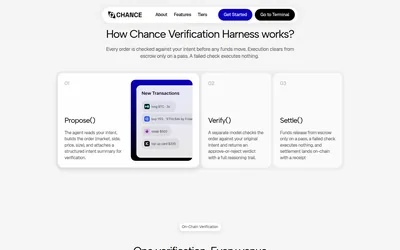

Check an AI agent’s proposed market, outcome, price and size against the original instruction before allowing an on-chain transaction to settle.
- Access Web · API · MCP
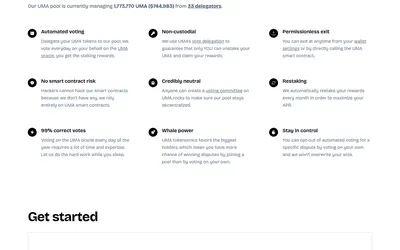

Delegate UMA voting to an automated pool and manage oracle participation, reward claiming and dispute-specific overrides.
- Access Web
Frequently asked questions about SEDA
What is a Data Proxy for?
Connecting a private or proprietary source using its access key.
Can Fast upload a new program?
No; deployment is a separate step.
Can a developer test before deployment?
The runbooks include local build and test steps.
Is this a retail trading terminal?
It is developer infrastructure.