 Polytoolhub

What is GDELT?
GDELT turns news coverage into structured event and knowledge-graph records, with downloadable data and analysis tools. It can help researchers find reporting patterns, locations and related entities around a geopolitical market question.
Its output reflects what media report and how automated systems classify it. A spike in coverage is not a verified event count, and a coded event is not by itself a settlement source.
Who it is for
- OSINT researchers following geopolitical narratives
- Developers building news-monitoring and event-analysis pipelines
Features and coverage
- Available on
- Web, Datasets, BigQuery
- Event records
Explore structured actors, actions and geographic context extracted from news.
- Knowledge graph
Research entities, themes and relationships in media coverage.
- Data access options
Use analysis tools, raw downloads or the documented BigQuery datasets.
Workflows with GDELT
Investigate a news pattern
Filter to a topic, location and time window, then inspect the original articles behind relevant records.
Build a monitoring baseline
Compare coverage using consistent queries and sources before interpreting a sudden increase.
Pricing and total cost
GDELT describes its database and public analysis service as free and open. External compute or BigQuery usage can have separate costs.
Access: Public documentation and downloads are available; external analysis platforms have their own access requirements.
Getting started
- Choose the event or knowledge-graph dataset.
- Define a consistent topic, geography and date range.
- Inspect original reporting before using a record as evidence.
Useful links
What to check
- Automated extraction, duplicate coverage and uneven media attention can distort counts. Verify material claims against original reporting and authoritative sources.
A closer look
Ratings & reviews
User reviews 0
The main score switches to user ratings after 5 published reviews.
A specific example helps the next person choose the right tool.
Related tools
Browse category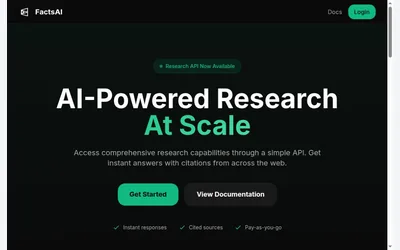

Retrieve cited research answers through a JSON API for forecasting and event-analysis workflows.
- Access API
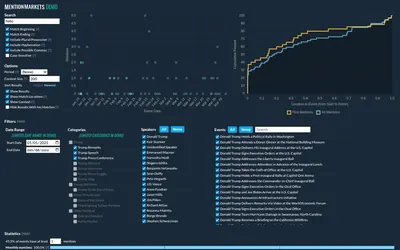
Search transcripts for a market’s keywords and inspect every match in context.
- Access Web
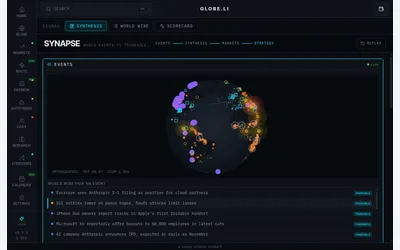
Explore world news and prediction-market context in Globe’s geographic research workspace.
- Access Web
Frequently asked questions about GDELT
Does more coverage mean an event is more likely?
Not necessarily. Coverage volume measures media attention and can reflect duplication or changing source availability.
Is GDELT a Polymarket settlement source?
It is a research dataset; use the source and conditions specified by the actual contract.
What does GDELT cost?
GDELT describes its database and public analysis service as free and open. External compute or BigQuery usage can have separate costs.
What access does GDELT require?
Public documentation and downloads are available; external analysis platforms have their own access requirements.