 Polytoolhub
What is Codex Prediction Markets API?
Codex’s prediction-market API provides a data layer for building screeners, event pages and wallet analytics. It separates events from individual markets, exposes both outcome prices, and supports time-windowed statistics such as volume, liquidity and unique traders. The same API family covers Polymarket and Kalshi, so an application can share much of its query and display logic across venues.
Who it is for
- Developers building market discovery and event dashboards
- Teams ranking markets by recent activity
- Researchers combining wallet performance with market data
Features and coverage
- Available on
- GraphQL API
- Markets & venues
- Polymarket, Kalshi
- Research topics
- Market data, Trader analytics
- Event and market filters
Query high-level event groups or individual markets by category, status, volume, liquidity and ranking metrics.
- Time-windowed statistics
Compare activity across short and long windows, including trade counts, unique traders and changes in liquidity or open interest.
- Outcome price bars
Retrieve OHLC and volume data for market charts, with explicit IDs and time ranges.
- Trader discovery
Filter traders by volume, PnL and other supported metrics, then inspect their market-level activity.
- Trade and holder data
Query trade history, outcome-token holders and positions for a selected market.
- GraphQL explorer and recipes
Use documented examples for discovery, trader profiles, charts and complete event pages.
Workflows with Codex Prediction Markets API
Build a market screener
Filter open events, sort on the intended activity window, then query their individual markets and outcome prices. Keep venue IDs attached to every row.
Create a trader page
Fetch the trader’s statistics, markets and time-series activity, then link the result back to the corresponding market records.
Chart both outcomes
Request market bars for a defined resolution and date range, and display the outcome series with their own labels.
Pricing and total cost
Prediction-market endpoints require a Growth or Enterprise plan. Confirm the plan’s request allowance and price through the Codex dashboard or sales path before designing the polling frequency.
Getting started
Before you start: An event groups related markets; it is not interchangeable with one outcome market.
- Create a Codex account with access to the prediction-market endpoint family.
- Open the GraphQL Explorer and run a documented discovery query.
- Set the protocol filter for Polymarket or Kalshi and select the exact fields needed.
- Retain the full Codex event, market and trader identifiers in your application.
- Add pagination, bounded time windows and plan-aware request limits before collecting a larger history.
Useful links
What to check
- An event groups related markets; it is not interchangeable with one outcome market.
- Market and event IDs include venue and network components. Do not replace them with a display title.
- This data API supplies analytics and market information; order execution requires a separate integration.
A closer look
Ratings & reviews
User reviews 0
The main score switches to user ratings after 5 published reviews.
A specific example helps the next person choose the right tool.
Write a review
How was your experience with Codex Prediction Markets API?
Share what you used, what worked and what could be better. We confirm your email and review the submission before publishing.
To submit a review, email info@polytradingbot.com with the tool name, your rating and your experience. Enable JavaScript to prepare a draft here.
Related tools
Browse category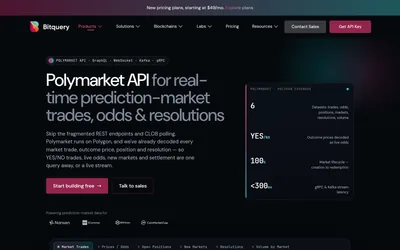

Query and stream decoded Polymarket on-chain trades, balances, market creation and settlement through Bitquery’s blockchain data platform.
- Data coverage Trades · Positions · Settlement
- Access API
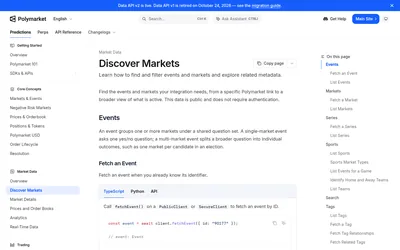

Discover Polymarket events, markets, tags, series and sports metadata before querying prices or building a market catalog.
- Data coverage Markets · Events
- Access API
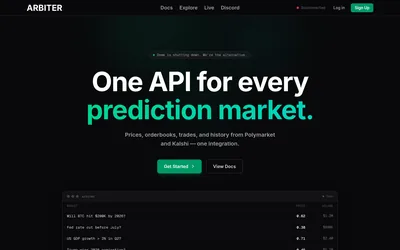

Query normalized Polymarket and Kalshi markets, historical books, wallet analytics and matched events through one data API.
- Data coverage Markets · Events · Order books · Trades · Prices · Positions · Cross-venue matches
- Access API
Frequently asked questions about Codex Prediction Markets API
Is this OpenAI Codex?
No. It is the market-data API published by Codex at codex.io.
Can one integration cover Kalshi and Polymarket?
Yes. The prediction-market schema supports both with protocol-specific filters and identifiers.
Can I obtain trader metrics?
The API includes trader statistics, trader-market data and activity bars.
Is the free API plan enough?
The prediction-market documentation specifies Growth or Enterprise access.